Orthopedic Joint Pain Doctors in Metro Atlanta
 Joint Replacement
Over time, the demand we place on our joints can cause severe joint pain and discomfort. After proper diagnosis, joint replacement may be recommended for pain relief. Joint pain can affect any location in the body where two or more bones meet.
Severe joint pain is the most common reason patients undergo a joint replacement procedure. Whether your pain is a result of an old injury, of a degenerative condition like arthritis or osteoarthritis, or of a fracture, joint replacement procedures may be the recommended treatment option.
Nearly any joint in the body can be replaced with a fully functioning artificial implant, but the most common joint replacements are of the hip, knee, or shoulder.
At Georgia Bone & Joint, our board-certified joint replacement doctors specialize in joint replacement surgeries, including total joint replacements, osteotomies, partial replacements, and joint resurfacing procedures.
You may be a candidate for a joint replacement surgery if you are experiencing any of the following symptoms:
- Severe joint pain
- Pain in the joint that keeps you awake at night
- Joint discomfort that prevents you from participating in recreational activities
- Joint pain that limits your ability to conduct necessary and daily functions, such as climbing stairs or standing up
- You have attempted more conservative treatment methods, such as exercise or therapy, without success
Total Joint Replacement Conditions
At Georgia Bone & Joint, we are committed to meeting the orthopedic needs of our community and providing our patients with the most advanced treatment options for the best possible outcomes. As part of that commitment, we offer joint replacement surgery as an outpatient procedure for ankle, hip, knee, and shoulder patients who meet specific criteria.
- Total Hip Joint Reconstruction
- Total Hip Replacement
- Total & Partial Knee Joint Reconstruction
- Jiffy Knee Replacement
- Total Knee Replacement
- Total Shoulder Replacement
Performed at our state-of-the-art Georgia Bone & Joint Surgery Center, our outpatient joint replacement procedures offer our patients the following benefits:
- Outpatient procedures are designed to expedite recovery
- You’ll be able to leave the surgery center the day of your procedure and immediately start recovering from the comfort of your own home
- Flexible scheduling
- Save on costs with the reduced hospital stay
Why Choose Georgia Bone & Joint?
Our joint replacement surgeons at Georgia Bone & Joint have completed additional training specifically in joint replacement. With this advanced training, our joint replacement surgeons have the experience and expertise to assess, diagnose, and treat your joint replacement condition individually to your needs.
Our doctors and staff at Georgia Bone & Joint Surgery Center are specialty-trained to ensure the highest possible level of treatment, and they are exclusively dedicated to the pre-operative, operative, and post-operative care of orthopedic patients. Additionally, our joint replacement surgeons have completed additional training specifically in joint replacement, and they have the knowledge and skill to help you return to your active lifestyle.
If you’re suffering from any of the following symptoms, you may be a candidate for outpatient joint replacement surgery:
- Severe pain in the ankle, hip, knee, or shoulder that may keep you awake at night
- Joint pain that prevents you from resting or prohibits you from activity
- Joint pain that disrupts necessary and daily functions, such as climbing stairs or walking
To see if an outpatient joint replacement procedure is the right option for you, speak with one of our expert joint replacement surgeons today by calling 770-502-2175 or schedule an appointment online.
KNEE REPLACEMENTS
Subvastus Approach
What is a Subvastus Muscle-Sparing Knee Replacement?
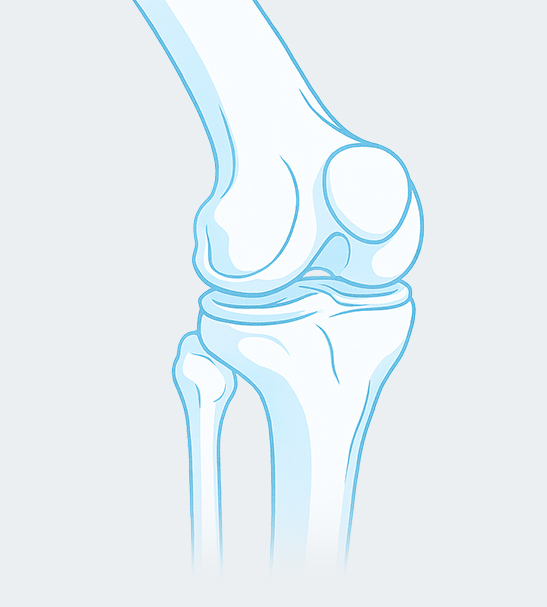
A subvastus knee replacement is an anterior approach to total knee arthroplasty that prioritizes preserving the quadriceps muscle and tendon. The quadriceps is the large group of muscles at the front of your thigh, and its tendon connects it to the kneecap (patella). This muscle group is essential for walking, climbing stairs, and standing up from a seated position.
Instead of cutting through this vital structure, the surgeon accesses the knee joint by going underneath a portion of the quadriceps muscle known as the vastus medialis. The surgeon lifts this muscle to expose the joint, replaces the damaged surfaces with an artificial implant, and then allows the muscle to return to its natural position. Because no major muscles or tendons are divided, the knee’s natural mechanics are better preserved.
During a Subvastus Knee Replacement
A subvastus knee replacement offers several advantages, primarily because it’s a less disruptive surgical experience. Instead of cutting through the quadriceps tendon, the surgeon accesses the knee joint by working underneath the vastus medialis muscle.
Because this approach leaves the quadriceps intact, patients often experience:
- Less Pain After Surgery: Avoiding a large incision into the quadriceps muscle usually results in less postoperative pain and a reduced need for strong pain medications.
- Better Knee Function: Preserving the quadriceps mechanism allows for better muscle control and strength. A key recovery milestone, the straight leg raise, is often easier to perform right after surgery.
- Shorter Hospital Stays: With better pain management and a quicker recovery, patients can often return home sooner.
- Reduced Blood Loss: As a less invasive technique, the subvastus approach is often associated with less bleeding during the procedure.
Book an appointment with one of our Physicians:
The Jiffy Knee
An Alternative Method to Traditional Knee Replacement
Are you seeking a knee replacement procedure that offers a faster recovery time and minimal trauma to your muscles or tendons? Look no further than Jiffy Knee. Our innovative technique is designed with your comfort and well-being in mind, ensuring a swift return to your active lifestyle.
Unlike traditional knee replacement methods, Jiffy Knee surgeons prioritize muscle and tendon preservation. We don’t cut any muscles or tendons during the procedure. Instead, we employ specialized instruments and techniques to gently “lift” the muscle and slide it aside. With only the skin and capsule being cut, our approach minimizes trauma and accelerates healing. We do not classify Jiffy Knee as minimally invasive surgery (MIS) because there is nothing minimally invasive about a knee replacement, rather Jiffy Knee is minimally traumatic surgery (MTS). Minimal soft tissue trauma is our goal.
Benefits of Jiffy Knee
One of the key benefits of choosing Jiffy Knee is the remarkably short surgery time. Our streamlined process typically takes just 30 minutes to implant, significantly reducing time spent in the operating room and under anesthesia.
But what truly sets Jiffy Knee apart is the opportunity for less pain and a quicker recovery. By preserving vital muscle and tendon structures, our technique minimizes post-operative discomfort and enables you to get back on your feet sooner.
Don’t let knee pain hold you back any longer. Discover the difference with Jiffy Knee and take the first step towards a more active, pain-free life. Contact a Jiffy Knee surgeon today and experience the future of knee replacement surgery.
Book an appointment with one of our Physicians:
HIP REPLACEMENTS
Insignia
Founded on Stryker’s signature principles of implant fit, Insignia is your collared, metaphyseal-filling hip stem designed for muscle-sparing approaches. Insignia continues Stryker’s heritage of 3D CT-based implant design through SOMA (Stryker Orthopedics Modeling and Analytics) technology. First used in Accolade II with its size-specific medial curvature, SOMA allows Stryker to dynamically test implant designs to allow for an enhanced implant fit across various femoral morphologies. Insignia incorporates geometries of two clinically successful stems – the SOMA design of Accolade II and the trapezoidal design of Secur-Fit – to optimize cortical engagement and proximal fill. Mako compatible.
Book an appointment with one of our Physicians:
SHOULDER REPLACEMENTS
Anatomic Shoulder Replacement
InSet® Total Shoulder Arthroplasty
The InSet® Shoulder System was born out of a simple yet critical question: Could we create a glenoid implant that lasts longer and performs better across a wider range of patients?
Glenoid loosening remains the leading cause of failure in Total Shoulder Arthroplasty (TSA). Traditional glenoid designs often sit on the bone surface, possibly leading to instability and progressive loosening over time. The InSet® Glenoid was designed specifically to address this challenge by focusing on mechanical stability and long-term durability.
The InSet® Glenoid employs a novel design that positions the implant within a pocket of sclerotic bone, a technique that has been shown to significantly reduce mechanical stress at the bone-implant interface. Finite Element Analysis (FEA) demonstrates an 87% reduction in “rocking horse” stresses—recognized as a primary contributor to implant loosening. This innovative approach not only addresses the structural limitations of traditional implants but also offers surgeons a reliable and reproducible solution for enhancing implant longevity.
Supported by a growing body of peer-reviewed studies, the InSet® Glenoid has proven effective across a variety of clinical indications, including cases involving advanced arthritis and severe bone loss. These outcomes are validated by both scientific data and real-world clinical experience, confirming its versatility as an everyday-use glenoid where anatomic glenoids are indicated.
By prioritizing implant stability and addressing a key cause of failure in TSA, the InSet® Glenoid provides surgeons with a proven and practical tool for improving patient outcomes. Its design reflects Shoulder Innovations’ commitment to advancing arthroplasty techniques through evidence-based solutions.
Book an appointment with one of our Physicians:
Reverse Shoulder Replacement
InSet® Reverse Total Shoulder Arthroplasty
Shoulder Innovations developed the InSet® Reverse System to optimize biomechanics by focusing on one critical question: How could we make a reverse shoulder behave more like an anatomic shoulder replacement?
By addressing this question, the InSet® Reverse System can help surgeons maximize what remains of their patients’ native anatomy, with the goal of improving post-operative motion and overall quality of life.
The InSet® Reverse System offers surgeons an innovative and reproducible solution for managing challenging shoulder conditions while preserving biomechanical integrity. The system can optimize rotational capacity through its lateralized glenoid, lateralized humerus construct. This thoughtful approach can position the greater tuberosity in a way that can maximize post-operative function.
Supported by a growing body of scientific evidence and real-world results, the system ensures precision in helping the surgeon restore motion and stability. By combining practical versatility with biomechanical innovation, the InSet® Reverse System can help surgeons deliver improved outcomes for their patients.
Book an appointment with one of our Physicians:
ANKLE REPLACEMENTS
The STAR Total Ankle Replacement
Total ankle replacement
The Scandinavian Total Ankle Replacement (STAR™ Ankle) is intended for use as a non-cemented implant to replace a painful arthritic ankle joint due to osteoarthritis, post-traumatic arthritis or rheumatoid arthritis.
Book an appointment with one of our Physicians: